If you record podcasts, audiobooks, voice-over, or music from home — and you live near an airport — you’ve probably experienced this moment:
-You’re mid-sentence.
-The read is perfect.
-Then… vvvvrrrrrrrrrrrrrrr ✈️
…Take ruined.
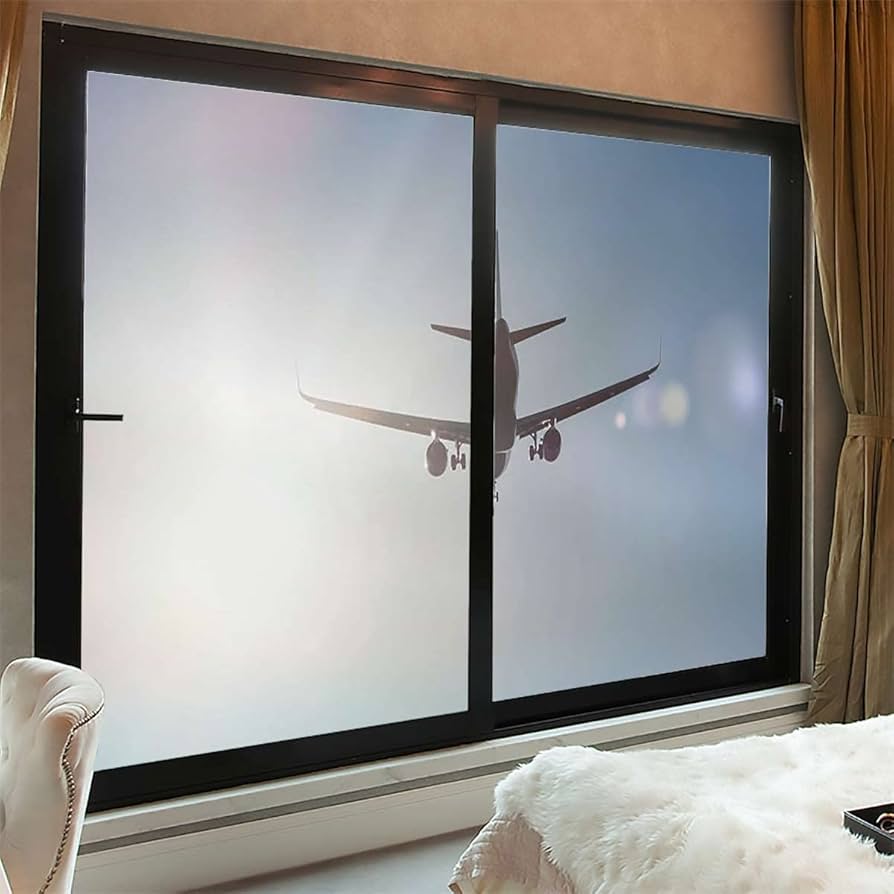
I live about nine miles from Raleigh-Durham International Airport, and for a while I assumed airplane noise was just something I had to “fix in post.” Turns out, that’s the worst approach.
The better solution?
Analyze flight data and record when planes aren’t flying over you.
Here’s how to do it — step by step.
Step 1: Confirm whether you’re actually on a flight path
Living “near” an airport doesn’t automatically mean you’re doomed. What matters is whether aircraft regularly pass over your home at low altitude.
Airports rotate runways based on:
- Wind direction
- Time of day
- Traffic volume
That means flight paths change — sometimes daily.
Tools to use
What to do:
- Open a live flight map
- Zoom in to your exact neighborhood
- Watch traffic for 15–20 minutes
If planes repeatedly pass overhead below ~5,000–6,000 feet, they will show up in sensitive microphones.
Step 2: Understand peak vs quiet airport traffic windows
Most commercial airports operate in predictable “banks” of arrivals and departures.
Common high-noise windows
- Early morning (6–9 AM) – business departures
- Late afternoon/early evening (3:30–7:30 PM) – return flights and connections
These are the worst times for narration, audiobooks, and VO work.
Common quiet windows
- Late morning to early afternoon (roughly 10:30 AM–1:30 PM)
- Late evening (after ~9:30 PM)
- Very early morning (around 5–6 AM)
This is when fewer aircraft are climbing directly overhead — and when they do, they’re usually higher and quieter.
Step 3: Prove it with your own recordings (this is the “aha” moment)
Instead of guessing, record silence.
Seriously.
How to do it
- Open your DAW
- Record 2–3 minutes of room tone at:
- A “bad” time (ex: 8 AM)
- A “good” time (ex: noon)
- Switch to Spectrogram View
What airplane noise looks like
- Wide, smooth bands
- Strong energy below ~200 Hz
- Long fades in and out (not sharp spikes)
After a few days, patterns jump out immediately. You’ll see when your house is quiet.
Step 4: Create your own “safe recording windows”
Once you’ve observed flight traffic and spectrograms for a week, you can confidently block recording time.
My rule of thumb
Hit record when:
- Live flight maps show minimal departures
- Ambient noise sits below ~−50 dB
- You’re inside your identified quiet window
Hold off when:
- Departures occur every 2–3 minutes
- You hear long, rising low-frequency rumble
- It’s during known commuter flight banks
This approach beats noise reduction every time.
Step 5: Why fixing airplane noise in post rarely works
Aircraft noise lives in low frequencies — the same area that gives your voice warmth and authority.
Aggressive noise reduction can:
- Thin your voice
- Introduce artifacts
- Fail audiobook QC checks
Scheduling around noise keeps your audio clean before you ever hit record.
Bonus: Make it repeatable
If you want to level this up:
- Keep a simple quiet-time log (date, time, noise yes/no)
- Check a flight map before recording
- Stack narration sessions during your quiet windows
- Save editing, admin, and marketing for noisy hours
This turns a frustration into a workflow.
Final takeaway
Living near an airport doesn’t mean you can’t produce professional-quality audio.
It just means you need to:
- Stop guessing
- Start observing
- Let data tell you when it’s safe to record
Airplanes are predictable.
Once you understand their rhythm, they stop ruining your takes.
About Johnny B
Johnny B is a voice actor, audiobook narrator, and independent journalist who records professional audio from a home studio just outside Raleigh, North Carolina. As the creator of On Air with Johnny B and the founder of Mil-Spec Digital, he focuses on practical, real-world solutions for creators working outside traditional studio environments.
Living near a major airport forced Johnny B to solve a problem many podcasters, voice actors, and musicians face: unpredictable airplane noise ruining otherwise perfect takes. Instead of relying on heavy noise reduction or expensive studio builds, he began analyzing flight patterns, recording data, and environmental noise — turning frustration into a repeatable workflow.
Johnny B covers audio production, entertainment journalism, creative technology, and creator workflows, with a hands-on approach shaped by real projects, real constraints, and real results.