The Hidden Voice Actors of Rock & Metal: When Musicians Become Characters
From Tom Petty’s unforgettable turn as Lucky on King of the Hill to rock and metal performers who found unexpected life behind the microphone, some musicians do more than make cartoon cameos — they become the characters.
Some musicians do more than appear in cartoons. They disappear into characters.
There is a big difference between a musician making a celebrity cameo in an animated series and a musician becoming part of that show’s world.
A band can stop by The Simpsons. A singer can appear as themselves in a novelty episode of Scooby-Doo. Those moments can be funny, nostalgic and completely enjoyable. But they are usually built around one simple joke: Hey, look who showed up.
That is not what happened when Tom Petty walked into Arlen, Texas.
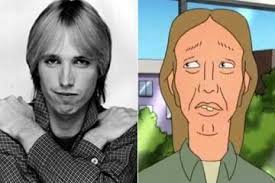
On King of the Hill, Petty did not appear as the legendary songwriter behind “American Girl” or “Free Fallin’.” He became Elroy “Lucky” Kleinschmidt: Luanne Platter’s drawling, philosophical, occasionally ridiculous boyfriend-turned-husband, whose proudest financial achievement involved slipping in a puddle at Costco.
Lucky was not a cameo. He was a character.
Tom Petty voiced Lucky across 28 episodes between 2004 and 2009, becoming a genuine member of the King of the Hill ensemble. According to Mike Judge, the character began when writer and showrunner John Altschuler described Lucky as looking like “Tom Petty without the success.” Someone eventually had the wonderfully absurd idea of asking the actual Tom Petty to play him. Petty agreed — and, according to Judge, was so good at the table read that the role kept growing.
That story opens the door to a much more interesting question than “Which musicians have appeared in cartoons?”
Which musicians have shown that they can actually become characters?
Because once you start listening for it, the crossover makes perfect sense. Musicians already understand rhythm, breath, tone, attitude, storytelling and the intimacy of a microphone. Rock and metal singers, in particular, often spend entire careers slipping between personas: the wounded storyteller, the swaggering frontman, the monster, the villain, the survivor, the lunatic and the hero.
Sometimes, all they need is a script.
What Counts as Real Voice Acting Here?
Let us establish the house rules before this turns into a list of every guitarist who wandered through a cartoon for 30 seconds.
For this conversation, a musician counts when they have performed as an actual character, contributed meaningful vocal performance to a role, or shown enough dramatic commitment that the work extends beyond a promotional guest appearance.
That means:
- Playing yourself on a cartoon for a quick gag is fun, but it is not the focus here.
- Recording one line because the episode wanted a famous name is not automatically a voice-acting career.
- Creating a character, sustaining a performance or using the voice as part of the storytelling absolutely counts.
This is why Tom Petty as Lucky matters so much. He did not arrive with a guitar and a wink to the audience. He arrived with a questionable backstory, an unusual relationship with basic math and a personality that fit naturally beside Hank, Peggy, Bobby and Luanne.
He belonged there.
Tom Petty and the Mike Judge Effect
King of the Hill was always built differently from most animated comedies.
The show did not depend on celebrity cameos crashing through the front door every week. Its comedy came from people: their habits, their pride, their blind spots, their dignity and their wonderfully specific ways of speaking.
That made Tom Petty an inspired fit.
Lucky could easily have been played as a one-joke stereotype: the lovable but not especially educated neighborhood drifter with an odd past and questionable decision-making skills. Instead, Petty gave him an unexpected warmth. Lucky was ridiculous, but he was not cruel. He was dim, but he was not empty. He loved Luanne, tried in his own crooked way to do right and somehow carried himself with the confidence of a man who genuinely believed the universe had rewarded him for surviving a Costco accident.
Petty’s speaking voice already carried the qualities that made his songs so recognizable: relaxed phrasing, dry humor, a little weariness and an effortless sense that he had lived through some stories. Under Mike Judge’s direction, those same qualities became the foundation of a character.
There is something almost poetic about it. Tom Petty spent decades writing songs about outsiders, dreamers, losers, lovers and ordinary people searching for a little freedom. Then he stepped into animation and gave voice to one more beautifully strange American character.
That is the magic of casting a musician well: sometimes the qualities audiences already love in the music become even clearer when the melody is taken away.
Jack Black: When a Rock Frontman Becomes an Animated Leading Man
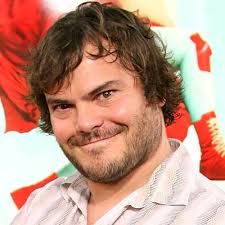
If Tom Petty is the quietly brilliant example, Jack Black is the stadium-sized version.
Black’s music career with Tenacious D has always relied on character, commitment and vocal athleticism. Tenacious D songs work because Black treats every absurd premise as if it is the final act of a rock opera. He does not half-sing about dragons, destiny, demons or the greatest song in the world. He attacks the material with the conviction of a man attempting to save humanity with one very aggressive high note.
Animation was a natural extension of that energy.
As Po in the Kung Fu Panda franchise, Black found something more than comedy. Po is enthusiastic, insecure, hungry, heroic, frightened and deeply sincere — often in the same scene. Black’s performance works because he gives the character genuine heart beneath the chaos.
Then came Bowser in The Super Mario Bros. Movie, where Black turned an iconic video-game villain into a lovesick theatrical tyrant who could believably command an army and sit at a piano singing about Princess Peach. Before those signature roles, he had already voiced Lenny in Shark Tale and Zeke in Ice Age.
Notable voice credits:
- Po — Kung Fu Panda franchise
- Bowser — The Super Mario Bros. Movie
- Lenny — Shark Tale
- Zeke — Ice Age
What makes Jack Black so effective is not merely that he has a recognizable voice. Many celebrities have recognizable voices. Black has the willingness to sound foolish, enormous, vulnerable, threatening or completely unhinged if the character requires it.
In rock terms, he never walks onstage and whispers through the encore. In voice acting, that level of commitment is gold.
Flea: From Funk-Rock Bass Lines to Full Cartoon Chaos
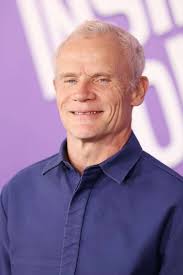
There may be no musician-to-character casting choice more delightfully appropriate than Flea as Donnie Thornberry.
As the bassist for Red Hot Chili Peppers, Flea built a career around kinetic movement, unpredictable energy and performances that seem only loosely governed by ordinary human physics. Then Nickelodeon asked him to voice Donnie, the feral adopted child of The Wild Thornberrys, a little boy who communicates largely through shrieks, noises and explosive physical chaos.
That is not casting. That is destiny.
Donnie was not a throwaway character. He was a central member of the Thornberry family throughout the series, which aired from 1998 through 2004, and Flea also voiced him in the franchise’s movie work. Later, Flea appeared in Pixar’s Inside Out as Mind Worker Cop Jake.
Notable voice credits:
- Aftermath – Transformers:EarthSpark
- Donnie Thornberry — The Wild Thornberrys Movie and Rugrats Go Wild
- Mind Worker Cop Jake — Inside Out
Flea is an especially interesting example because Donnie does not rely on long dramatic speeches. The role depends on sound, rhythm, instinct and personality. A musician who has spent his life communicating physically and sonically was suddenly using those same abilities to animate a wild child.
Voice acting is not always about having a beautiful narrator’s voice. Sometimes it is about making a burst of nonsense sound completely specific, emotionally readable and impossibly funny.
Flea understood the assignment.
Phil Collins: A Disney Voice Role Hiding in Plain Sight
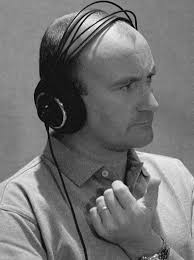
Phil Collins is most closely associated with Disney animation because of the songs he wrote and performed for Tarzan. That soundtrack became one of the defining musical collaborations in Disney history.
But Collins also stepped into a legitimate character role for Disney.
In 2003’s The Jungle Book 2, he voiced Lucky, the goofy vulture who joins the familiar group of jungle scavengers and has the unfortunate habit of antagonizing Shere Khan. It is not an enormous voice-acting résumé, and it should not be exaggerated into one. But it is a genuine animated character role, and Collins throws himself into its broad comedic energy.
Notable voice credit:
- Lucky the Vulture — The Jungle Book 2
Collins makes the list for an important reason: not every musician who crosses into voice acting needs to reinvent their entire career. Sometimes one well-chosen role reveals a completely different side of a familiar performer.
The soft-rock balladeer, Genesis drummer and emotional engine behind “You’ll Be in My Heart” also had a perfectly serviceable cartoon-vulture voice waiting in the chamber.
Life contains multitudes.
Rob Zombie: Of Course He Voiced a Monster
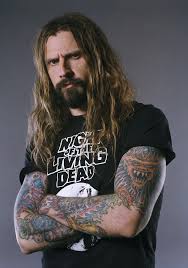
Some casting decisions require an explanation.
Rob Zombie voicing the Lizard does not.
In Spider-Man: The New Animated Series, Zombie voiced Dr. Curt Connors and his reptilian alter ego, the Lizard, in the episode “Law of the Jungle.” He also contributed voice performances to projects including Justice League, Mr. Pickles and James Gunn’s Guardians of the Galaxy, where he voiced a Ravager Navigator.
Notable voice credits:
- Dr. Curt Connors / The Lizard — Spider-Man: The New Animated Series
- Ravager Navigator — Guardians of the Galaxy
- Additional voice work — Justice League and Mr. Pickles
Zombie’s involvement is especially fitting because his entire creative career has lived at the intersection of music, horror, filmmaking, comic-book visuals and grotesque character design. Whether he is directing a horror film, designing a stage show or delivering a voice performance, he understands the value of atmosphere.
The Lizard is not just a villain who growls. He is a scientist trapped inside his own monstrous transformation. Casting someone whose work has always embraced the boundary between human and monster makes a certain grimy, neon-green kind of sense.
Rob Zombie may not be building an animation empire, but when the role calls for horror, menace or something that sounds like it just crawled out of a toxic sewer, his number belongs somewhere near the top of the contact sheet.
Dave Grohl: One Perfectly Metal Animated Detour
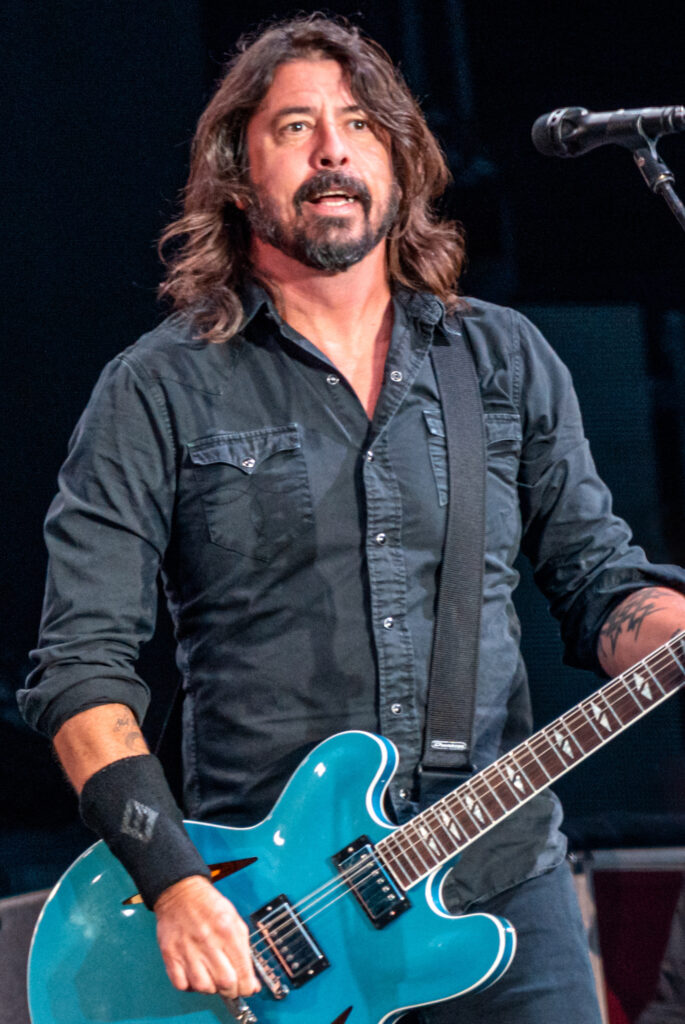
Dave Grohl is not a career voice actor, and nobody needs to pretend otherwise. His inclusion here is smaller, stranger and appropriately loud.
In the 2010 Metalocalypse episode “Doublebookedklok,” Grohl voiced Abdule Malik, a fictional Syrian leader caught up in the show’s absurd, violent and very heavy-metal brand of geopolitical chaos.
Notable voice credit:
- Abdule Malik — Metalocalypse, “Doublebookedklok”
That is a limited credit, but it passes our test: Grohl was playing an actual character in an animated universe that was deeply connected to rock and metal culture.
And really, Metalocalypse was exactly the kind of place where musicians could contribute without feeling like celebrity decorations. The series was a brutal love letter to heavy metal, built around the fictional band Dethklok and created by musician, actor and animator Brendon Small. Bringing real rock musicians into that world was not a gimmick; it was part of the texture.
Grohl’s appearance is less “hidden second career” and more “excellent evidence that animation studios should probably hand him stranger scripts.”
Corey Taylor: When a Voice Becomes the Monster
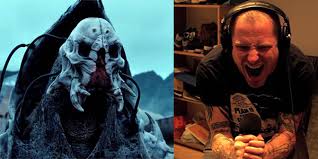
Corey Taylor belongs slightly outside the traditional animation lane, but his example may reveal more about the connection between metal and voice performance than almost anyone else on this list.
In 2015, the Slipknot and Stone Sour frontman provided the terrifying roar of the Fisher King, an alien warlord featured in the Doctor Who episode “Before the Flood.” The role was not a conventional character performance built on paragraphs of dialogue. It was something far more specialized: the sound of a monster.
Notable vocal-performance credit:
- The Fisher King’s roar — Doctor Who, “Before the Flood”
That distinction matters. Taylor was not cast because producers needed a famous rock singer to smile for the credits. He was cast because his instrument could do something unusual, frightening and narratively useful.
Metal vocalists spend years developing sounds that many people assume are simply noise: growls, screams, snarls, whispers and bursts of aggression. But in the right production, those sounds become character language. They communicate scale, danger, pain, age, violence or something entirely inhuman.
Corey Taylor’s Doctor Who appearance is a reminder that voice acting is bigger than dialogue. Sometimes an actor builds a character with a speech. Sometimes a metal vocalist builds one with a single roar that makes viewers reconsider turning off the lights.
Why Musicians Make Such Natural Voice Performers
The connection between music and voice acting is not accidental. Both disciplines ask performers to tell a story using sound alone.
A singer cannot rely on facial expressions when someone is listening through headphones. A voice actor working in animation, games, audiobooks or commercials faces the same challenge. The listener needs to feel the intention without seeing the performer create it.
Musicians often enter a recording booth with several built-in advantages.
They Understand Rhythm
Comedy depends on timing. Drama depends on pauses. Menace depends on knowing precisely how long to hold silence before delivering the next word.
Musicians live inside rhythm. Even when they are not singing, they tend to understand cadence instinctively. Tom Petty’s Lucky worked partly because his delivery had its own laid-back musicality. Jack Black’s comedy often works because he can stretch, accelerate or explode a line like a vocalist building into a chorus.
They Know How to Use a Microphone
Good voice acting is not merely speaking loudly and clearly. It is knowing when a whisper is more powerful than a shout, when proximity creates intimacy and when backing away from the mic gives a performance room to grow.
Singers already spend their careers making those decisions.
They Build Personas
Rock and metal performers are frequently character-driven artists, whether they admit it or not.
The theatrical arrogance of a frontman, the vulnerability of a ballad, the villainous growl in a breakdown, the storyteller narrating a concept album — all of that requires a performer to step partly outside themselves.
Voice acting simply gives that instinct a name and a new playground.
They Understand Vocal Texture
A technically perfect voice is not always the most interesting voice.
Tom Petty’s relaxed drawl gave Lucky life. Flea’s chaotic noises gave Donnie personality. Rob Zombie’s gravelly menace fit a comic-book monster. Corey Taylor’s extreme vocal capability helped turn an alien villain into something audiences could feel before they could fully understand it.
Sometimes the imperfections, rough edges and strange little turns in a musician’s voice are exactly what a character needs.
The Rock and Metal Artists Animation Should Be Calling Next
The fun part of recognizing successful crossovers is noticing the performers who already seem halfway there.
Some singers build worlds so vividly, embody characters so completely and manipulate their voices so confidently that it feels less like asking whether they could voice a character and more like asking why nobody has handed them one yet.
Spencer Charnas: Horror Animation Is Practically Waiting for Him
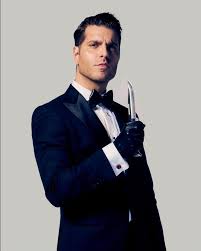
Ice Nine Kills frontman Spencer Charnas has spent years turning horror fandom into theatrical musical storytelling. The band’s most recognizable work does not merely reference scary movies; it performs them, translating villains, victims, twisted narrators and cinematic set pieces into songs and elaborate live productions.
Charnas would be an obvious fit for horror animation, an adult animated series, a video-game antagonist or a darkly comic villain who understands he is having far too much fun.
He has the necessary ingredients: sharp diction, theatrical timing, sinister charm and the ability to move between menace and humor without losing the character. A voice role built around a charismatic slasher, unhinged showman or horror-loving antagonist would feel less like stunt casting and more like long-overdue paperwork.
In other words: someone give this man an animated murder hotel, a cursed carnival or a villain song immediately.
Lzzy Hale: The Hero Voice Hiding in Rock Radio

Halestorm’s Lzzy Hale has the kind of voice animation regularly searches for in a lead character: powerful, recognizable, emotionally direct and capable of carrying both vulnerability and battle-ready confidence.
She would be a natural fit for a warrior, rebellious pilot, rock-and-roll superhero or animated heroine who does not need to ask permission before kicking down the door.
Where some vocalists seem destined for villains, Hale has genuine lead-character energy. She sounds like the person who survives the third act and gets the closing anthem.
Chris Motionless: Gothic Antihero Territory
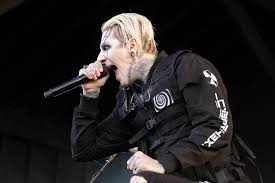
Motionless In White frontman Chris Motionless has built an aesthetic around darkness, theatrical imagery and emotional intensity. His vocal identity blends aggression with atmosphere, making him an intriguing candidate for gothic animation, supernatural games or a morally complicated antihero.
Not every dark voice needs to play the villain. Sometimes the best casting is the character standing between the audience and the thing lurking in the shadows.
Chris Motionless feels like that voice.
Will Ramos: Creature Work, Monsters and the Limits of the Human Voice
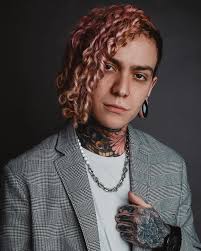
Lorna Shore vocalist Will Ramos has attracted attention in part because his extreme vocal performances sound almost biologically impossible. Whether used for animation, games, horror sound design or creature vocalization, that level of control offers obvious possibilities.
A performer capable of producing monstrous sounds with precision is not simply screaming into a microphone. He is shaping texture, intensity and emotion. Used properly, that could become the voice of a demon, ancient beast, infected creature or final-level video-game nightmare.
Corey Taylor’s Fisher King contribution proved there is a lane for metal vocalists whose voices can make monsters feel alive. Ramos seems built to push that lane even further.
The Larger Point: A Great Voice Is Not Limited to One Stage
The most interesting musicians are rarely just musicians.
They are narrators. Comedians. Actors. World-builders. Impressionists. Monster-makers. Emotional translators. They turn ordinary air into something that reaches people in cars, bedrooms, concert venues, movie theaters and, sometimes, animated towns in Texas.
Tom Petty did not need to become a full-time voice actor for Lucky to matter. He only needed the right role, the right creators and the willingness to give a fictional man in a sleeveless shirt the same honesty he gave his songs.
Jack Black expanded that crossover into blockbuster territory. Flea made chaos lovable. Phil Collins revealed an unexpected comedic side. Rob Zombie found his comic-book monster. Dave Grohl briefly stepped into heavy-metal animation. Corey Taylor used his instrument to give an alien warlord a voice audiences could feel in their bones.
The lesson is simple:
Musicians do not become compelling voice actors by abandoning what made them musicians. They become compelling voice actors by bringing those same instincts into a new kind of story.
And sometimes, as Mike Judge and Tom Petty demonstrated, the perfect animated character is waiting inside a familiar voice all along.
Frequently Asked Questions
Was Tom Petty really the voice of Lucky on King of the Hill?
Yes. Tom Petty voiced Elroy “Lucky” Kleinschmidt on King of the Hill across 28 episodes between 2004 and 2009. Lucky became Luanne Platter’s boyfriend and eventual husband, making Petty a recurring member of the show’s cast rather than a one-time celebrity guest.
Did Phil Collins voice a character in Tarzan?
Phil Collins wrote and performed major songs for Disney’s Tarzan, but his qualifying character voice role for this list is Lucky the Vulture in Disney’s 2003 animated sequel The Jungle Book 2.
What cartoon character did Flea voice?
Flea, bassist for Red Hot Chili Peppers, voiced Donnie Thornberry in Nickelodeon’s The Wild Thornberrys. He also voiced Mind Worker Cop Jake in Pixar’s Inside Out.
Has Rob Zombie done voice acting?
Yes. Rob Zombie voiced Dr. Curt Connors / The Lizard in Spider-Man: The New Animated Series and also contributed voice performances to projects including Guardians of the Galaxy.
Did Corey Taylor voice a character on Doctor Who?
Corey Taylor provided the roar for the Fisher King, the alien villain in the 2015 Doctor Who episode “Before the Flood.” His contribution is best described as specialized creature-vocal performance rather than a traditional dialogue-heavy voice role.
Want More Stories From Behind the Mic?
On Air with Johnny B. explores the artists, actors, filmmakers and creators shaping entertainment from every angle — from music and horror to animation, voice acting and the stories audiences almost missed.
Follow On Air with Johnny B. for upcoming interviews, features and behind-the-scenes entertainment coverage.
About the Author
About John Bowman
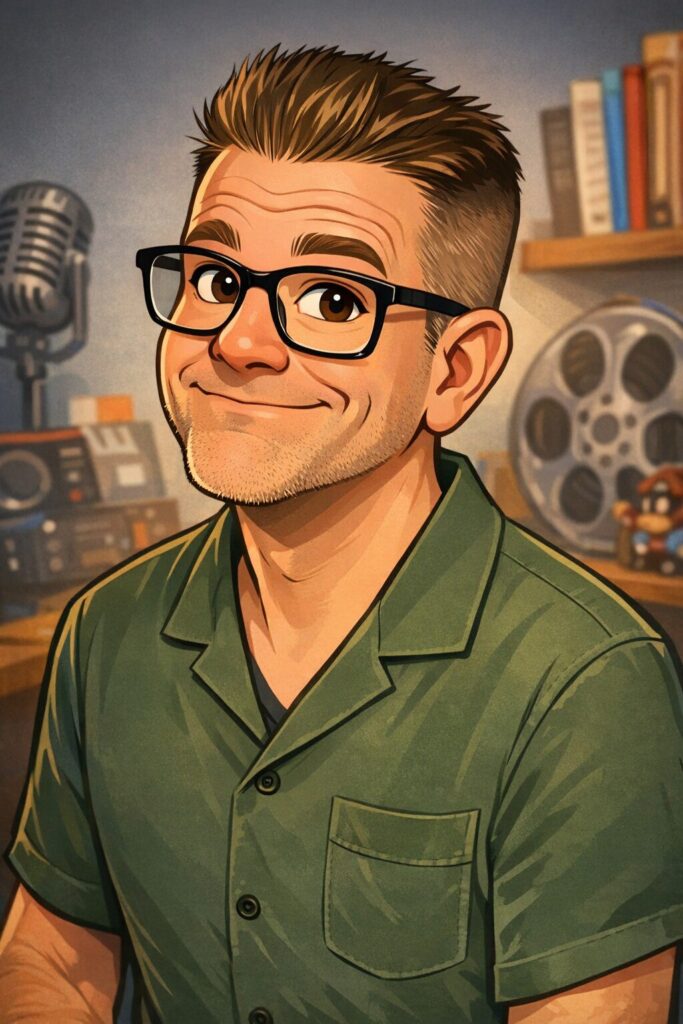
John Bowman is a journalist, podcast host, voice actor and digital media strategist, as well as the host of On Air with Johnny B. Through Mil-Spec Digital, he covers the intersection of entertainment, storytelling, music, film, television and the creators behind the work. His background in voice performance and entertainment journalism gives him a particular appreciation for artists who can turn a microphone into an entire character.