More Than a Star Wars Conversation
There will absolutely be Star Wars stories.
But this interview begins somewhere deeper.
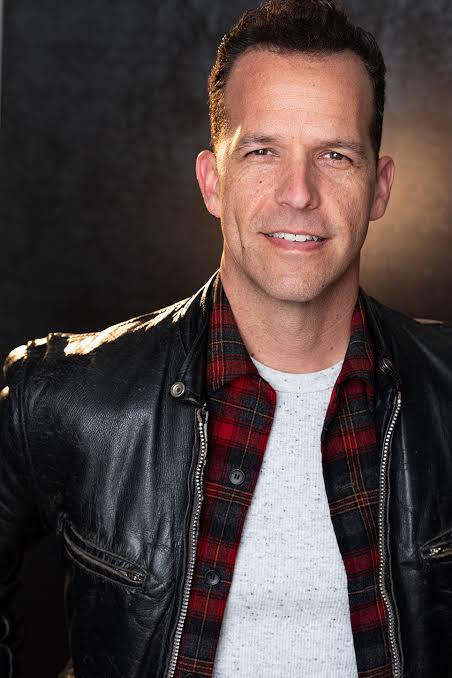
Chris Bartlett’s work sits at the intersection of acting, physical performance, craftsmanship, costuming, technical problem-solving, fandom, and collaboration.
When a performer disappears completely beneath metal, fiberglass, fabric, electronics, or armor, nearly every traditional acting tool changes.
There may be no facial expression.
Very little natural body movement.
Restricted visibility.
Heat.
Weight.
Mechanical limitations.
And yet the character still has to feel alive.
That is the craft we want to understand.
Built, Worn and Brought to Life
Chris brings an especially fascinating perspective because his relationship with these characters does not begin when a camera starts rolling.
He understands the object itself.
How it is built.
How it fits.
How it moves.
What it allows a performer to do—and what it absolutely does not.
That creates an unusual relationship between craftsman and performer.
A mechanical joint can influence a gesture.
Restricted movement can become part of a personality.
A limitation can unexpectedly create the thing audiences remember.
We’ll explore what happens when the technical realities of a costume meet the instincts of an actor.
Because eventually something remarkable has to happen:
The audience has to stop seeing the materials.
And start seeing someone.
Acting Without a Face
When movement becomes dialogue
How do you act when the audience cannot see your expression?
A pause can communicate uncertainty.
A slight tilt of the head can become curiosity.
The speed of a turn can suggest alarm, irritation, excitement, or confusion.
Sometimes a few inches of movement are doing the work normally performed by an actor’s entire face.
Chris has developed that physical vocabulary through years of character performance.
We want to find out how.
What does he think about inside the costume?
Does every character walk differently?
Can a performer develop a personality for someone who may only appear on screen for seconds?
And when does movement stop being choreography and become acting?
From Fan to Part of the Galaxy
There is another part of Chris Bartlett’s story that we find equally compelling.
He began as someone who loved this universe.
Eventually, he became one of the people responsible for helping make it feel real.
That transition—from fandom to professional contribution—is something very few people ever experience.
We’ll talk about what happens when something that inspired you becomes part of your profession.
How do you preserve the excitement?
How does your relationship with the material change?
And is there ever a moment when you look around a set and realize:
I’m not visiting this world anymore. I’m helping build it.
Carrying C-3PO’s Legacy
One particularly fascinating chapter of Chris Bartlett’s career is his long history performing as C-3PO for television, live appearances, commercials, and special events.
It is a character whose physical language audiences have understood for generations.
That creates an extraordinary acting challenge.
How do you honor an iconic performance without simply impersonating it?
What details matter?
What movements immediately feel wrong?
And what does it mean to temporarily become the physical custodian of a character loved around the world?
For Chris, that journey also included learning directly from Anthony Daniels, the performer who originated C-3PO.
We’re looking forward to exploring what Chris learned—not only about movement, but about respecting the responsibility that comes with stepping inside something audiences treasure.
The Characters Behind the Performer
Chris Bartlett’s modern Star Wars work has included numerous droids, creatures, and other characters across productions including:
- The Mandalorian
- The Book of Boba Fett
- Obi-Wan Kenobi
- Ahsoka
Among his recognizable performances are characters including Q9-0 (“Zero”), the Ferryman, and other mechanical inhabitants of the galaxy.
But rather than running down a list of credits, we want to understand how those characters differ from inside the costume.
Which character moved differently?
Which one presented the strangest physical challenge?
Which seemingly tiny role became unexpectedly memorable?
Which costume fought him every step of the way?
And which character does Chris wish audiences knew more about?
The People Who Make the Galaxy Feel Real
When audiences watch a finished scene, they see one seamless world.
Behind it may be dozens—or hundreds—of people whose individual contributions disappear into the illusion.
Performers.
Fabricators.
Costumers.
Puppeteers.
Creature teams.
Stunt professionals.
Camera crews.
Lighting teams.
Sound designers.
Visual-effects artists.
Production assistants.
Craftspeople.
People whose names may never become household names, but whose work determines whether a fictional world feels genuinely inhabited.
Chris gives us an opportunity to talk about those people.
Because sometimes the most important person in a scene isn’t standing in the center of the frame.
Sometimes they’re barely visible at all.
And sometimes they’re completely hidden inside the character.
Life Inside the Armor
There is also a physical reality to this work that television rarely communicates.
Costumes can be hot.
Heavy.
Restrictive.
Difficult to see through.
Difficult to hear through.
And unforgiving when a performer misses a mark.
We want to know what happens inside those moments.
How does Chris communicate with a director?
How does he hit marks with limited visibility?
What happens during repeated takes?
How much preparation goes into something that may ultimately occupy only a few seconds of screen time?
And perhaps most importantly:
How do you remain expressive when the costume itself is fighting your natural human movement?
Craftsmanship, Reliability and Being Ready
Chris’s career also opens the door to a larger conversation about creative careers.
Not every path into entertainment follows the traditional actor-to-audition-to-role trajectory.
Sometimes an unusual collection of skills becomes your advantage.
Building.
Costuming.
Performing.
Problem-solving.
Understanding production.
Being dependable.
Being prepared when the opportunity finally appears.
We want to explore how those pieces came together for Chris—and what his journey might teach someone whose own dream doesn’t fit neatly inside a conventional job description.
What We Want to Discover
This conversation will explore:
- The physical language of droid performance
- Acting without facial expressions
- The relationship between fabrication and performance
- Chris’s journey from lifelong fan to professional performer
- Learning the movement and responsibility of C-3PO
- Life inside restrictive costumes
- Creating personality through tiny physical choices
- Behind-the-scenes collaboration
- The artists audiences rarely see
- The importance of preparation and reliability
- The strange career paths that can lead into entertainment
- The characters and moments Chris remembers most
- What still excites him about stepping into another world
The Human Inside the Machine
There is an interesting contradiction at the center of Chris Bartlett’s work.
The more successfully he disappears…
…the more believable the character becomes.
Audiences aren’t supposed to see the actor.
They’re supposed to see the droid.
The creature.
The inhabitant of another world.
But behind every mechanical gesture is still a human decision.
Behind every movement is a performer.
Behind every finished character is an enormous amount of discipline, craftsmanship, collaboration, and imagination.
This time, we’re turning the camera toward the person inside.
About the Host
John “Johnny B” Bowman
John Bowman is a U.S. Army veteran, journalist, author, podcaster, voice actor, and mental-health advocate.
As the creator and host of On Air with Johnny B, he focuses on thoughtful conversations with the people behind entertainment, music, storytelling, advocacy, and creative work.
His interview style is informed by curiosity, preparation, lived experience, and a sincere respect for the work required to create something meaningful.